
Why Your Artificial Turf Smells After Your Dog Uses It
QUICK ANSWER: The smell is ammonia released by uric acid crystals left behind in dog urine. Water and regular soap rinse away the liquid but leave those crystals locked in the turf and infill, and when the sun heats the grass they release ammonia again — which is why the smell keeps coming back, especially in Arizona heat. The real fix is an enzyme cleaner made for pet odor, good drainage, and the right infill. Plain rinsing won't break the crystals down.
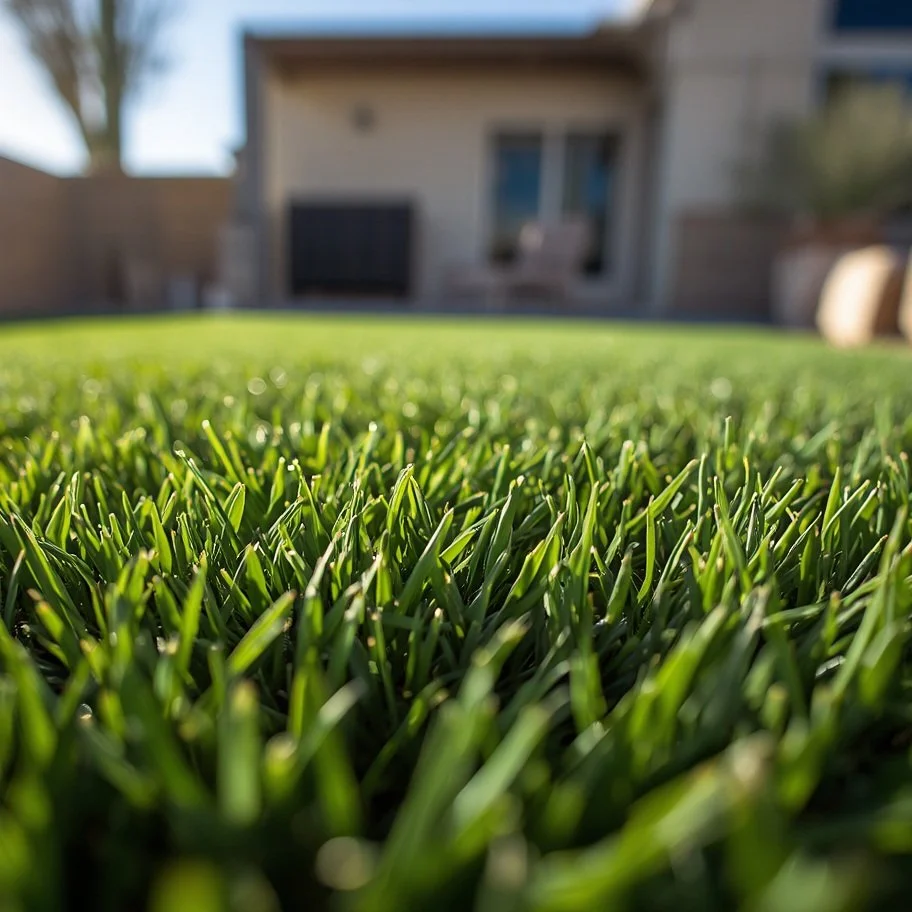
You hose the turf off, it smells fine for a day, and then the heat hits, and the dog-pee smell is back like you never cleaned it. That cycle frustrates a lot of pet owners, and it's not because you're doing it wrong — it's because the thing causing the smell isn't what rinsing removes. Once you understand what's actually trapped in the turf, both why it keeps returning and how to actually stop it make sense.
What's Actually Causing the Smell
Dog urine contains uric acid, and as it dries, it leaves behind uric acid crystals. Those crystals are the problem. The urine residue slowly breaks down and releases ammonia gas — that sharp, eye-watering smell — back into the air. So the odor isn't the wet urine; it's the dried crystals continuing to off-gas long after the liquid is gone.
Here's the catch that traps everyone: the crystals are not very soluble in water, and they aren't broken down by regular rinsing or by acidic cleaners like vinegar. You can hose the surface until it looks and smells clean, but the crystals stay locked in the turf fibers and the infill beneath. They're still there, waiting for the next hot day to release more ammonia.
Why the Heat Brings It Roaring Back
This is where Arizona makes everything harder. When the turf heats up in the sun, those trapped crystals release more ammonia — heat literally drives the gas back out. So you rinse in the cool morning, the surface seems fine, and then the afternoon sun bakes the turf, and the smell returns full force. The hotter the surface gets, the stronger the odor, which is exactly why pet turf smell is such a persistent complaint in the desert. It's not that your cleaning failed; it's that the heat reactivated what the rinse left behind.
Drainage Is Half the Battle
How well your turf drains decides how much urine sits in it versus passes through. Quality artificial turf is built with a permeable backing and a base designed to let liquid drain away quickly. If the turf or its base doesn't drain well, urine pools and soaks in, giving the crystals more material to build up and more to off-gas later. Poor drainage turns a manageable amount of pet use into a chronic odor source.
Infill matters here, too. The infill — the granular material worked down between the blades — can either trap odor or help control it. Some infills are made specifically for pets, with antimicrobial or odor-neutralizing properties, while a standard infill can hold onto urine residue. The combination of good drainage and pet-appropriate infill keeps urine moving through rather than collecting. If your turf was installed without pets in mind, this is often the hidden reason it smells more than a neighbor's — the same amount of dog use lands very differently on turf built to drain and resist odor than on turf that traps and holds it.
How to Actually Get Rid of It
| Step | Why it works |
|---|---|
| Rinse fresh urine promptly | Removes liquid before crystals form and set |
| Use an enzyme cleaner made for pet odor | Breaks down the uric acid crystals rinsing can't |
| Skip vinegar as the fix | It's acidic and doesn't break the crystals down |
| Ensure good drainage | Keeps urine from pooling and soaking in |
| Use a pet-appropriate infill | Resists holding and off-gassing odor |
The key move is an enzyme-based cleaner formulated for pet odor. Enzyme cleaners work by actually breaking down the uric acid crystals — the thing water can't dissolve — so the source of the ammonia is removed rather than just diluted. That's why an enzyme treatment stops the heat-activated smell when rinsing never could. Rinsing fresh urine promptly still helps, because it clears the liquid before as much crystal forms, but for odor that's already set in, the enzyme cleaner is what does the real work. Vinegar gets recommended a lot online, but because the crystals aren't alkaline, vinegar's acidity doesn't break them down — it can mask things briefly but leaves the source in place.
For turf that's been a pet area for a long time and smells no matter what you do, the buildup in the infill and base may be heavy enough that a deeper professional treatment, or refreshing the infill, is what finally clears it.
A Simple Routine That Keeps It Away
Staying ahead of the buildup is far easier than chasing it after the fact. Hose down the pet's favorite spots regularly rather than waiting for the smell to announce itself, since rinsing fresh urine before it dries means fewer crystals form in the first place. Treat those same high-traffic areas with an enzyme cleaner on a schedule — not just when the odor flares — so the crystal buildup never gets ahead of you. And on the hottest stretches of the year, when the turf bakes all afternoon, plan to clean a little more often, because that's exactly when any residue you haven't broken down will make itself known. A few minutes of regular rinsing and the occasional enzyme treatment is far less work than fighting an entrenched, heat-activated odor that has soaked deep into the base — and it keeps your turf a place the whole household actually wants to use.
Frequently Asked Questions
Because rinsing removes the liquid but not the uric acid crystals that dog urine leaves behind. Those crystals stay locked in the turf and infill and keep releasing ammonia over time, especially when the sun heats the grass. Plain water and regular soap can't dissolve them, so the smell returns. An enzyme cleaner made for pet odor is what actually breaks the crystals down.
Heat drives the ammonia out of the trapped uric acid crystals. When the turf surface bakes in the sun, the crystals release more gas, so the odor that seemed gone in the cool morning comes back strong in the afternoon. This is why pet turf odor is especially stubborn in hot climates like Arizona — the heat keeps reactivating the source the rinse left behind.
Not really. Vinegar is acidic, and the uric acid crystals that cause the recurring ammonia smell aren't broken down by acid, so vinegar can briefly mask the odor but leaves the source in place. The smell comes back, often with the next hot afternoon. An enzyme cleaner formulated for pet odor is the product that actually breaks the crystals down.
Use an enzyme cleaner made for pet odor to break down the existing crystals, rinse fresh urine promptly, and make sure your turf drains well so urine doesn't pool and soak in. A pet-appropriate infill helps resist holding odor. If the buildup is old and heavy, a deeper professional treatment or refreshing the infill may be needed to fully clear it.
Yes. If your turf or its base doesn't drain well, urine pools and soaks in rather than passing through, giving the uric acid crystals more to build up from and more to off-gas later. Good drainage keeps the liquid moving through the turf, which is a big part of controlling odor. Drainage and the right infill work together to keep pet areas manageable.