Nylon vs. Polyethylene Turf Blades: Which One Fits Your Yard?
QUICK ANSWER: Polyethylene (PE) blades are soft and comfortable, so they win for lawns, play areas, and pet runs. Nylon is stiffer and tougher, so it wins for putting greens and heavy commercial traffic. Many products blend the two.
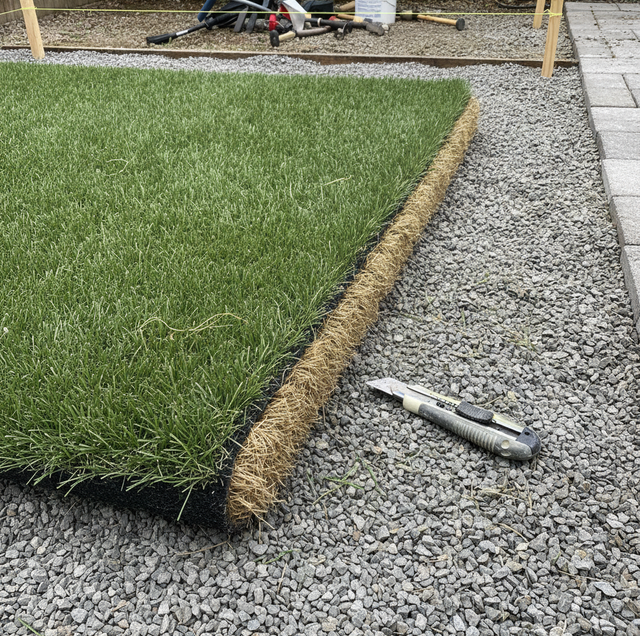
Walk barefoot across two artificial lawns, and you can feel the difference before anyone tells you what the blades are made of. One gives a little and feels almost plush; the other is firmer and coarser, closer to a stiff broom than a lawn. That difference usually comes down to the plastic the fibers are made from, and it is the single most useful thing to understand before you pick a turf. The blade material sets how the surface feels, how it handles traffic, and where it belongs, so it is worth knowing what separates the two fibers you will hear about most.
The Three Fibers Turf Is Made From
Synthetic grass blades are almost always one of three plastics: polyethylene, nylon, or polypropylene. Each behaves differently because the raw polymer is different, and manufacturers pick among them based on where the turf will live and what it has to survive.
Polyethylene, usually shortened to PE, is the soft one. It is flexible, it has a natural-looking sheen rather than a plastic glare, and it feels good against skin. That combination is why PE is the default face yarn for residential lawns, backyard play areas, and pet runs. It holds up well to normal use, but it is less rigid than nylon, so under constant heavy foot traffic, it does not spring back quite as aggressively.
Nylon, technically a polyamide, is the tough one. It is the stiffest, most heat-resistant, and most wear-resistant of the three fibers. Press it flat, and it springs back and holds its shape, even after being walked on thousands of times, which is exactly the trait you want where a surface takes a beating. The trade-off is that nylon feels firmer and coarser underfoot, so it is generally not the fiber you would choose for a lawn on which people lie down barefoot.
Polypropylene, or PP, is the third and least durable. It is cheaper and softer than nylon, but wears out faster and holds up poorly to heat and heavy use. You rarely see it as the main blade on an outdoor lawn. Instead, it shows up as a thatch layer, or as the whole fiber on budget and indoor turf where longevity is not the point.
Why Nylon Springs Back and PE Feels Better
The reason these fibers behave so differently comes down to how stiff the plastic is at the molecular level. Think of the blades like the bristles on two brushes: a soft paintbrush bends easily and feels gentle, but leave it pressed down, and it stays bent longer, while a stiff scrub brush is rougher on your hand but pops right back up the instant you lift the pressure. Nylon is the scrub brush, and PE is the paintbrush. Nylon's rigidity is what lets it recover its upright position under repeated load, which is precisely why it is chosen where traffic is constant, and matting is the enemy. PE's flexibility is what makes it pleasant to the touch and kinder on knees, elbows, and paws, which is why it wins out anywhere comfort matters more than maximum resilience.
That single property, stiffness, explains most of the practical differences you will read about. It is why nylon lasts longer under abuse, why it tolerates heat better, and why it feels harsher; and it is why PE is comfortable, natural-looking, and the standard choice for a family lawn, even though it is not the most rugged fiber on the shelf.
How the Fibers Compare
Here is the short version, side by side:
| Trait | Polyethylene (PE) | Nylon (polyamide) | Polypropylene (PP) |
|---|---|---|---|
| Feel underfoot | Soft, comfortable | Firm, coarse | Soft but flimsy |
| Stiffness/resilience | Flexible, good recovery | Stiffest, best recovery | Low |
| Durability under traffic | Good | Highest | Lowest |
| Heat and wear resistance | Good | Best | Weakest |
| Typical use | Lawns, play, pet runs | Putting greens, heavy commercial, thatch | Thatch, budget/indoor turf |
| Common role | Main face yarn | Face yarn or root-zone layer | Thatch or low-cost fill |
Matching the Fiber to the Job
The cleanest way to decide is to start from how the surface will be used, not from a spec sheet. A lawn you and the kids and the dog will actually live on wants softness and a natural look, so a polyethylene face yarn is almost always the right call. A backyard putting green wants a firm, dense, low surface that a ball rolls true across and that springs back after a season of foot traffic, which is nylon territory. A high-traffic commercial entryway or a dog-park surface leans the same way toward nylon or a nylon blend, because resilience is worth more there than a plush feel.
In practice, a lot of turf is not one fiber at all. Many products pair a soft PE face yarn, the part you see and touch, with a nylon or polypropylene thatch curled in underneath to add body and help the taller blades stand up. You get the comfortable surface of PE with some of the support of a stiffer fiber woven into the same product, so the either-or choice is often really a question of the blend and which fiber does which job.
What Intense Sun Adds to the Decision
Heat is the honest complication here. Nylon tolerates high temperatures better than PE or PP, so on paper it is the most heat-durable fiber. But that is about the fiber surviving heat, not about the surface staying cool, and those are two different things. Every synthetic turf gets hot in direct sun, regardless of blade material, because none of it cools itself the way living grass does through moisture. No fiber choice changes that basic fact, so it is worth being clear-eyed about it rather than expecting a material to solve it.
What actually brings the surface temperature down is separate from the blade. A quick rinse with a hose drops the surface heat fast, lighter-colored infill absorbs less heat than dark infill, some products are engineered with heat-reflective or heat-reducing technology, and shade from a tree, sail, or pergola makes a real difference during peak afternoon hours. Manufacturers who market cooling features are describing real approaches, but treat specific temperature-drop claims as marketing until you see how a product performs in your own yard. Pick the fiber for how the surface needs to feel and last, and manage heat with infill, rinsing, and shade, which is where the real gains are.
Frequently Asked Questions
They pull in opposite directions, which is why one turf rarely does both well. A putting green needs a short, dense, firm surface (typically a low pile around a half-inch or less) so the ball rolls true and the nylon fibers spring back after being walked on; that short, stiff cut is also what sets the green's roll speed, which an installer fine-tunes with the pile height and how much infill is brushed in. A lawn wants the opposite: a taller, softer PE pile that gives underfoot for bare feet and lounging, but would make a ball wobble and die. Because the two goals fight each other, many homeowners set a small nylon green as its own zone and keep a PE lawn around it rather than compromising with a single fiber that does neither job well.
For most families, yes, which is why it is uncommon as a lawn surface. Nylon's stiffness makes it feel coarse and firm underfoot rather than plush, and it runs warmer in the sun than a comparable PE lawn because it is denser and packs the fiber more tightly. Neither trait is a defect; they are the same qualities that make nylon excellent on a putting green. For an area where people sit, play, and go barefoot, PE's softer feel and slightly cooler surface are usually the better match.
Only at the margins. All synthetic turf heats up in direct sun regardless of fiber, and the differences between materials are smaller than most people expect. Blade color, density, and infill move the surface temperature far more than the polymer itself does. If heat is your concern, the effective levers are a hose rinse, lighter-colored or heat-reducing infill, and shade during peak hours, not swapping one fiber for another. Choosing turf on the assumption that a given blade material stays cool in the sun sets you up for disappointment.
Nylon and nylon blends resist matting and wear better in a heavy pet run, so the face fiber does matter for durability. But for dogs, the blade is only part of the story. Drainage and backing often decide whether pet turf works long term, because urine has to flow straight through rather than pool, and a permeable backing with a properly graded base under it is what makes cleanup and odor control manageable. A tough fiber over poor drainage still fails. Match a durable face yarn to a free-draining backing and base, and the surface handles pets far better than fiber choice alone would suggest.
It shifts the workload. Softer, more flexible PE blades mat down more readily under traffic, so they benefit from periodic brushing to stand the fibers back up and keep the lawn looking full. Stiffer nylon recovers on its own more, so a nylon or nylon-blend surface tends to need less coaxing to stay upright. Infill still matters for both, since it weights the turf, supports the blades at the base, and in pet areas helps with drainage and odor, but the amount of hands-on grooming leans lighter on stiffer fibers and heavier on soft ones.
They can matter as much as the fiber name. Face weight is how much yarn is packed into the turf, measured per square area, and a higher face weight generally means a denser, more durable, more realistic surface, regardless of which polymer it uses. Blade shape matters too: fibers are extruded in profiles such as C-shape, S-shape, W-shape, or a diamond spine, and those shapes affect how upright the blade stands and how well it resists matting. A well-designed PE blade with a supportive shape and a healthy face weight can outperform a thin, sparse nylon product, so read the full spec rather than stopping at the material label.
Cool Turf Is a Choice You Make Up Front
Artificial turf gets hot because it can't sweat the way grass does — that's physics, not a defect. But how hot your turf gets and how usable it is in July come down to choices: the color, the infill, the shade, and the habit of a quick hose-down before use. Plan for the heat at installation and manage it day to day, and you get the low-maintenance lawn without the afternoon burn.
Schedule a free on-site assessment and let a turf pro match the right fiber, face weight, and infill to how you actually use your yard — comfort where you want it, durability where you need it. Turfscapes of Arizona LLC serves Phoenix and across Arizona. ROC #293110. Call (602) 884-8760.