How to Brush Matted Artificial Turf and Make It Look New
Artificial turf that looked full and upright on installation day can start to look flat and tired after a season of use, especially along the paths you walk most. The blades lie down, the color reads duller where they've flattened, and the whole yard can look worn even though the turf itself is fine. In most cases, nothing is broken. The fibers have simply been pressed over, and standing them back up is a maintenance job you can do yourself with the right tool and a little patience.
Understanding why brushing works makes the whole task make sense, so it's worth a minute before the steps.
QUICK ANSWER: Matted turf is usually recoverable. Cross-brush the flattened area against the direction the blades lean using a stiff synthetic-bristle push broom or a power broom, then top up and redistribute the infill so it supports the standing fibers. Never use a metal or wire brush, which shreds the blade tips. Matting that comes from heat-melted or permanently laid-over fibers will not brush back and is a different problem.
Why Turf Blades Mat Down In the First Place: Turf fibers are made to stand upright, but they're flexible on purpose so they feel soft and springy underfoot. Every step, every rolling toy, every pet lap, and the steady weight of a patio chair or planter presses those blades over in whatever direction the pressure came from. Do that a few thousand times in the same line and the fibers learn to lie flat. This is why traffic lanes show first: the route from the gate to the door, the strip in front of a bench, the corner a dog favors. Furniture leaves the clearest marks of all, because the load never lets up, so the blades under a table leg or a heavy pot stay compressed for weeks at a stretch.
Infill plays a quiet role in all of this. The granular sand brushed down between the blades is what holds each fiber upright from the base, like soil packed around a plant stem. As feet grind across the surface, that infill gets pushed aside, compacted, or kicked out of the high-traffic strip. With less support at the root, the blades fold over more easily and stay down longer. So matting is really two problems at once: fibers bent the wrong way, and infill that has drifted out of position.
Why Brushing Actually Refreshes the Lawn: Brushing fixes both problems in one pass, which is why it works so well. Dragging stiff bristles against the grain catches each bent-over blade and lifts it back to vertical, breaking the set that traffic pressed into it. At the same time, the brushing action stirs the infill that had packed down or drifted, pulling it back up around the base of the fibers so it can prop them again.
A worn lawn recovering under a broom is a little like carpet pile after you run a vacuum against the nap: the fibers that were crushed flat and looking dark and matted spring back up, catch the light again, and the whole surface looks fuller and more even. Turf responds the same way. You are not adding anything or repairing damage. You are simply reversing the lean and resetting the support underneath. That is the entire mechanism, and it is why a tired-looking yard can look close to new after twenty minutes of the right kind of brushing.
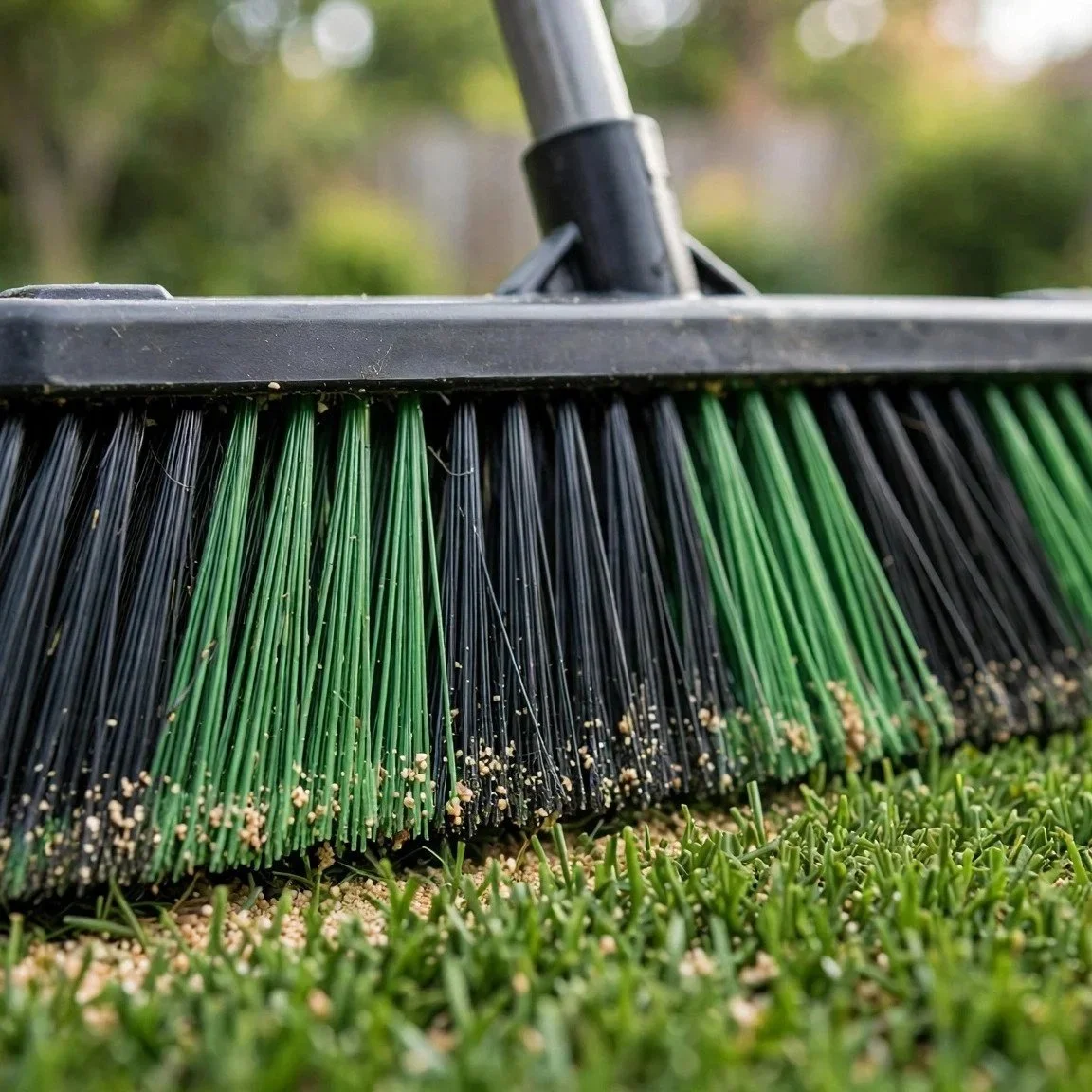
The Right Tool, and the One to Never Use: The tool matters more than anything else here. Reach for a push broom with stiff synthetic or nylon bristles; the firmer, the better, so the bristles have enough backbone to bend the blades back rather than just gliding over them. A broom sold specifically for turf grooming is ideal, but a heavy-duty synthetic yard broom does the job on smaller areas.
Never use a metal or wire brush. Wire bristles are harder than the turf fibers, so instead of combing the blades upright, they catch and tear the tips, leaving frayed, whitened ends that never recover and actually make the worn look permanent. The same caution applies to pressure washing: a high-pressure stream both damages the fiber tips and blasts infill out of the turf, which strips away the very support the blades need. Stiff synthetic bristles and a light touch beat force every time.
For a large yard, a power broom is the practical choice. It's a motorized tool with a rotating brush head that grooms wide areas fast and lifts heavily set fibers a hand broom would struggle with. Many installers use one for annual refreshes, and it can be rented. For a small patch or a single furniture dent, a hand broom is plenty.
How to Brush Matted Turf, Step by Step: Clear and rinse the surface first: Rake or blow off leaves, twigs, and loose debris before you touch the turf with a broom, and pick out anything larger by hand. Brushing over debris just grinds it down into the infill. If the area is dusty or soiled, a light rinse with a garden hose settles the dust and makes the blades easier to lift; let it drain before you start.
Brush against the grain: Find the direction the blades naturally lean, then push the broom the opposite way, into the fibers rather than with them. This cross-brushing is what stands the blades up. Short, firm strokes work better than long sweeping ones. Work in slightly overlapping rows so you don't leave untouched strips, and change your angle on stubborn spots to catch fibers from more than one side.
Top up and redistribute the infill: In heavily matted lanes, the infill has usually thinned out, so brushing alone won't hold. Sprinkle fresh infill of the same type already in your turf over the area, then brush it down into the base of the blades. The brushing both works the new granules to the root and pulls the existing infill back into the bare spots. Properly supported blades stand on their own and resist folding over again far longer.
Give high-traffic spots extra attention: The gate-to-door path, the play zone, and pet corners flatten faster than the rest of the yard, so they need brushing more often, sometimes monthly, while quiet areas may go a season or more. Brushing those lanes on a short cycle keeps them from setting into a permanent flat track.
Releasing Furniture Dents and Set-In Marks: Indentations left by furniture are their own small task. When you move a table, chair, or planter that has sat in one place, the blades underneath will be pressed into a sharp outline. Brush that spot the same way, against the grain, and most dents lift out within a pass or two. A stubborn mark responds well to a little water first: dampen the compressed area, let it sit a minute, then brush, because the moisture relaxes the set in the fibers. Rotating heavy furniture and planters every few weeks keeps any single spot from compressing long enough to hold a mark at all.
When Matting Is Permanent Rather Than Recoverable: Most matting brushes out, but not all of it. If the fibers have been heat-damaged, the tips can partially melt and fuse into a hard, shiny, crimped patch that no amount of brushing will stand back up, because the blades are no longer flexible. Very old fibers that have lost their resilience, or blades that have been crushed flat and laid over in the same direction for years, may also stay down for good. If a patch stays flat and dead-looking after a thorough cross-brush and an infill top-up, it has likely crossed from matted into damaged, and refreshing gives way to a spot repair or replacement of that section. The test is simple: recoverable matting responds to brushing, and permanent matting does not.
WARNING: Reflected sun off a nearby window or a glass door can concentrate enough to melt and fuse turf fibers in a small area, and so can a dropped grill or fire pit. Keep hot items and known reflective glare off the turf where you can.
Frequently Asked Questions
For most yards, a full cross-brush two to four times a year keeps the pile even, while heavy-traffic lanes and pet zones benefit from a quick monthly pass. Homes with large dogs or young children often move to a roughly six-week cycle, and a good signal to brush sooner is when you can see a distinct color difference between the flattened path and the untouched turf beside it.
Either works, but a light misting can help on badly set fibers because slight moisture makes stiff blades more pliable and easier to lift. Avoid brushing turf that is muddy or holding standing water, since wet grit turns abrasive under the bristles and can scuff the fiber tips. On a hot afternoon, the surface can also grow warm underfoot, so early morning or evening is more comfortable for the work and easier on the blades.
Indirectly, yes. Stirring and redistributing the infill during brushing loosens compacted granules so water and rinse-off drain through more freely instead of pooling on a packed surface, and it helps refresh deodorizing or antimicrobial infill in pet areas by working fresh granules down to the base. Brushing is not a substitute for rinsing pet spots, but a groomed, well-drained pile dries faster and holds less odor than a flattened, compacted one.
Match whatever is already in your turf, most commonly rounded silica sand or a coated or antimicrobial-coated sand for pet zones, so the new granules behave the same as the old. As a rough starting point, plan on about one to two pounds of infill per square foot for a top-up in a thinned traffic lane, adding gradually and brushing between passes rather than dumping it all at once. Mixing in a heavier granule than the turf was designed for can weigh the blades down instead of supporting them.
No, and a leaf blower is one of the safest maintenance tools you can use, since it clears leaves, dust, and light debris without touching the fibers or disturbing the infill. A shop vacuum on a low setting can lift stubborn debris from a small area, but keep it moving and off aggressive suction so it doesn't pull infill out of the pile. The tools that cause harm are the abrasive or high-force ones, wire brushes and pressure washers, not gentle air.
You can groom lightly at any time, but the more useful habit is a gentle cross-brush a few weeks after install once the infill has settled and traffic patterns start to show, which sets the pile evenly from the start. Brushing a brand-new lawn against the grain also helps blades that were compressed and folded inside the shipping roll open up and reach full height, so a fresh install often looks fuller after its first grooming.
Book a turf refresh or grooming visit — get your matted lawn standing tall and looking new again. Turfscapes of Arizona serves Phoenix, Scottsdale, and the Valley. ROC #293110. Call (602) 884-8760.