How Long Does Artificial Turf Last? The Honest Answer
A well-made synthetic lawn usually holds up for around 15 to 20 years. That is the honest range for a quality product on a properly built base, and it is the number most homeowners want confirmed before they commit. The catch is that the figure is an average, not a promise. Two lawns installed the same week can age very differently depending on what went under the fibers, how hard the surface gets used, and whether anyone ever touches it after install day.
So the more useful way to think about lifespan is this: the product sets the ceiling, and the install plus the daily use decide how close you actually get to it. A premium turf on a shortcut base can look tired in eight years. A mid-grade turf on a compacted, well-drained base with occasional brushing can still look presentable past year fifteen. Before you compare warranty numbers, it helps to understand which levers actually move the outcome.
QUICK ANSWER: Quality artificial turf typically lasts about 15 to 20 years. The real number depends on turf grade and UV stabilization, base compaction and drainage, how much foot and pet traffic it sees, sun exposure, and whether it gets brushed and topped up with infill. A good installation plus light maintenance pushes you toward the top of that range; a poor base or heavy, neglected traffic pulls you well below it.
What Actually Drives How Long Turf Lasts
Lifespan is not a single spec you can read off a label. It is the sum of a few factors that either reinforce or undermine each other over the years.
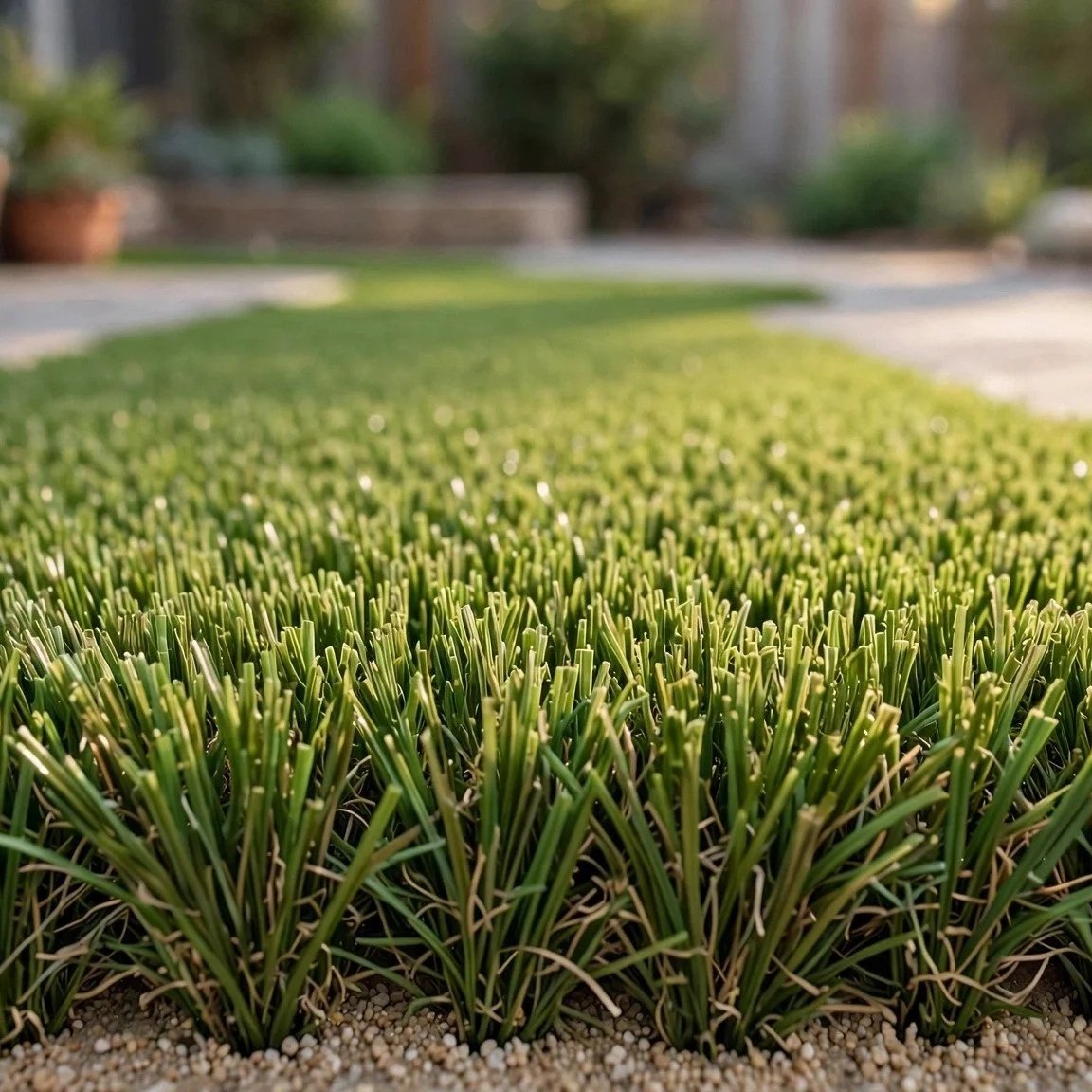
Turf Grade, Face Weight, and UV Stabilization: The fiber itself is the starting point. Face weight, the ounces of yarn per square yard, tells you how much material is packed into the pile. A denser, heavier turf resists crushing longer because more fibers share the load underfoot. Just as important is UV stabilization, additives blended into the yarn so sunlight breaks it down more slowly. Reputable manufacturers state their turf is UV-stabilized and back that claim with a warranty against excessive fading. Cheaper turf often skips or skimps on this, which is where the early color loss and brittleness show up.
A Properly Compacted, Well-Drained Base: The base is the part nobody sees and the part that decides the most. Under good turf sits a graded, compacted aggregate layer, usually a crushed rock like decomposed granite or road base, screeded flat and tamped down hard. That base carries the weight, sheds water, and keeps the surface from shifting. When it is built right, the turf lies flat and stable for its full life. When it is rushed, everything above it inherits the problem.
Foot and Pet Traffic: Use is the clock that never stops. A low-traffic side yard ages slowly. A main path from patio to gate, a dog's favorite lap route, or a spot where kids pivot and drag their feet takes concentrated punishment. Fibers in those lanes bend the same direction thousands of times and eventually lie over. Traffic does not ruin the whole lawn evenly; it wears the busy stripes first, which is why two areas of the same turf can look years apart.
Sun, Heat, and Moisture: Weather ages turf year-round, and it is worth being clear-eyed about it from both sides. Strong sun and UV slowly fatigue the fibers and fade color over many seasons. High surface temperatures on hot afternoons soften the fibers and make them easier to mat while they are warm. At the other end, moisture that lingers from irrigation overspray, pooling, or damp shade encourages odor and biofilm if drainage is poor. No single condition is the villain. Sun, heat, and trapped water each contribute a little wear in different months, so a durable lawn is one built to handle all of them rather than optimized for one.
Maintenance: Turf is low-maintenance, not no-maintenance, and the difference between those two words is measured in years. Periodic cross-brushing lifts the fibers back upright. Rinsing clears dust and pet residue. Topping up infill keeps the pile supported. None of it is hard, but skipping it entirely lets small problems compound until they become permanent.
What Quietly Shortens Its Life
Most turf does not fail dramatically. It gets shortchanged by a handful of avoidable problems that stack up quietly.
A bad base is the biggest one. If the aggregate was not compacted properly or the ground below settles, you get dips, low spots, and wrinkles as the turf follows the sag. Wrinkles concentrate wear along their ridges and turn into trip points, and once a base has moved, the fix is disruptive rather than simple.
Heavy traffic in the same lanes matts the fibers flat. Left unbrushed, those laid-over paths stop springing back at all. The fibers develop a permanent set, the way a carpet does in a hallway, and no amount of later brushing fully revives them.
Poor drainage causes trouble on two fronts. Water that cannot pass through pools on the surface and, for pet owners, it traps urine and odor in the infill instead of flushing it down and away. A base that drains freely and infill designed to resist odor keep that from taking hold; a compacted, clogged base does the opposite.
Cheap non-stabilized fiber degrades under the sun far faster than turf built with UV inhibitors. This is the failure mode that separates bargain turf from quality turf. The color goes chalky, the fibers grow stiff and splintery, and the pile loses its resilience years ahead of schedule.
Finally, neglect finishes the job. Letting infill wash out in heavy rain without ever replacing it leaves the fibers unsupported and prone to flattening. Letting leaves, dust, and organic debris pile up feeds surface growth and holds moisture against the backing. Each is minor on its own. Together, over years, they take real life off the lawn.
Reading the Signs That Turf Is Near the End
A synthetic lawn rarely announces its retirement. It drifts there. A few honest indicators tell you it is closer to replacement than to a refresh.
Permanently matted fibers are the clearest sign. If you brush a worn area against the grain and the blades simply lie back down within minutes with no spring left, the pile has lost its structure for good. Widespread, even fading is another, especially when the color has gone flat and grayish rather than the uneven fade of a shaded patch. Seams that have started separating, lifting at the edges or pulling apart down a join, point to adhesive and backing that have aged out. A backing that feels hard, thin, and stiff underfoot instead of pliable tells you the material itself has grown brittle. And drainage failure, water sitting on the surface long after it should have passed through, signals that the base or the perforations are no longer doing their job. One of these might be a repair. Several of them together usually means the lawn has given you its years.
How Maintenance Buys You Extra Years
The good news is that the same short routine that keeps turf looking fresh is exactly what extends its usable life. Think of it the way rotating tires works on a car: a little routine attention spreads the wear and delays the day you have to replace the whole thing.
Cross-brushing is the single highest-value habit. Working a stiff-bristled push broom or turf rake against the grain, then across it, lifts flattened fibers and redistributes infill so no lane wears faster than the rest. Rinsing with a hose clears dust and, in pet areas, flushes residue down through the drainage layer before odor sets in. Topping up infill every so often replaces what traffic and weather displace, keeping the pile supported so fibers stand rather than fold. And keeping seams and edges secure matters both for wear and for safety; a seam or perimeter that starts to lift is a trip hazard and an entry point for further separation, so pressing it back and re-securing it early prevents a small lift from becoming a torn edge.
TIP: Turf rewards gentle maintenance. A stiff nylon broom is right, but a wire or steel brush shreds the fibers. A garden hose is right, but a pressure washer can blast infill out and tear the backing. Plain water and mild turf-safe cleaners are right, while harsh solvents break down the yarn and the backing glue.
Warranty Numbers Versus Real-World Lifespan
Turf warranties often read eight, ten, or fifteen years, and it is easy to read that as the expected lifespan. It is not quite the same thing. A warranty is the manufacturer's promise against specific defects, typically excessive fading and fiber breakdown under normal use, within stated limits. It is a floor on performance, not a forecast of when the lawn wears out.
Real-world lifespan usually runs longer than the warranty term for a quality product that was installed well and gets basic care, which is how the 15-to-20-year range coexists with shorter warranty numbers. It can also run shorter than the warranty if the base was poor or the surface was punished and neglected, because most warranties assume a competent installation and reasonable use. So read the warranty for what it covers and for how long, then judge likely lifespan separately, on the strength of the base, the grade of the turf, and how the lawn will actually be lived on. The two numbers answer different questions.
Frequently Asked Questions
Often yes, because reduced UV exposure slows the fiber fatigue and fading that sunlight drives. The trade-off is that heavily shaded, damp areas dry out more slowly, so drainage and periodic rinsing matter more there to keep moisture and biofilm from building up against the backing. Shade helps the fibers and asks a little more of the base.
Localized damage often can be. A burned or torn patch can be cut out and replaced with a matching piece seamed in, and a lifted edge or separated seam can be re-secured. What cannot be repaired is widespread fiber fatigue or a failed base, because those are conditions of the whole system rather than one spot. As a rule, a single defect is a repair and system-wide wear is a replacement.
Infill, the granular material brushed down into the pile, does more than add weight. It holds the fibers upright so they resist matting, it cushions impact, and certain infills help manage odor and surface temperature. As traffic and rain displace it over the years, the pile loses that support and flattens faster, which is why periodic top-ups are part of getting full life from the turf rather than an optional extra.
Not by itself. Pile height is largely a look, while density and face weight, how much fiber is packed in, track durability more closely. A shorter, dense turf frequently outlasts a taller, sparse one because the crowded fibers share load and resist crushing. A taller pile can actually mat more visibly if it is not backed by enough density and infill to hold it up.
The fibers themselves tolerate normal outdoor temperatures without melting, but a very hot surface does soften them temporarily, which makes them mat more easily under traffic while warm, and a reflective adjacent surface such as a window or metal fixture can concentrate reflected sunlight onto one spot and scorch it. A brief rinse cools the surface, and screening or diffusing a strong reflection prevents the concentrated-glare kind of damage.
Sooner than most people expect. Even in the first year, high-traffic lanes begin to show direction and infill starts to settle, so a light cross-brushing every few weeks in busy areas and an infill check within the first several months set the pattern early. Starting the routine while the lawn is new keeps small wear from becoming a set pattern, which is far easier than reviving fibers that have already laid over.
Get a straight answer on your lawn's remaining life — a free on-site assessment tells you whether it needs a refresh or a rebuild. Turfscapes of Arizona serves Phoenix, Scottsdale, and the Valley. ROC #293110. Call (602) 884-8760.